Sunday, October 28, 2012

There Are Some Secrets In Making Beautiful Flower Garden

When it comes to garden layouts a little preparation is all that is needed to create a beautiful and bountiful flower garden space worthy of any garden show. Moreover, you can still improve the look through flower garden design, there are some tricks: Many popular gardening ideas are often a result of unintentional experimentation by either an over-enthusiastic amateur gardener or an over-confident gardening veteran. Ideas like beneficial pairing of different flower types, a breathtaking colorful display of a specific combination of perennials and annuals, a modified flower container, a particular potting mix etc. are all a result of an accidental stumble upon them.

If you decide to go for a small flower garden, then using pencil and paper to create your design is fine. In the design stage you will factor in such items as concrete or mulch for walkways, brick for walls, seating, water features or lighting or any other accessories you might want to add to your new garden. I would recommend you to plant a rose garden. Anyone can easily put together a fantastic container flower gardening that can be put in your yard, on the balcony or on the patio. Were going to take a quick tour of the basics of flower gardening. I bet you'll love to see a sight full of spring flower gardens in your backyard especially when it blooms to its fullest.


The most important thing to remember when creating flower garden designs is to consider the seasons. Different flowers bloom at different times each year and keeping this in mind is very important when constructing a garden.

The best time to get a jump start on any flower garden layout is well before the last frost has broken. In making a flower bed, opt for one which is as large as possible. However, a basic research and analysis effort is usually there before the stumbling happens. With any gardening undertaking, a flower garden must have its sufficient supply of water, light, and rich soil. There is something almost spiritual about rose gardens.

The first thing that you need to do is to decide the type of container that you wish to use, there are a massive range of different containers available that you can use to plant your own fruits, flowers and even vegetables in. If you can master these things then you too can grow a stunning flower garden. What flowers bloom during springtime? Spring is what many of us look forward to March and April. Before you start your design, take a little bit of time to do some research on the blooming cycle of the flowers you are considering including in your garden. During the bleak months of January and February sunny prospects come in the form of mail order seed catalogs.

Floriculture, or flower farming, is a discipline of horticulture concerned with the cultivation of flower gardening flowering and ornamental plants for gardens.

Monday, October 15, 2012

The Best Chrysanthemum Planting Guides

The chrysanthemum seems to have fallen out of fashion in modern gardens. One reason why this has happened is that chrysanthemums are perceived as too much hard work or troublesome. But there is less care involved than you may think and they offer many positive attributes to gardens. They are great plants to choose for this time of year, providing bold splashes of colour in the garden in late summer and autumn.

Originating in East Asia, the humble chrysanthemum has been growing in China for more than 2500 years. It is used for medicinal and flavouring purposes, as well as for its beautiful blooms. In Japan, the flower is very symbolic, with the Royal Family said to rule from the Chrysanthemum Throne. It has been their national flower for the past 100 years and is a symbol of happiness and longevity. In the late 18th century, the flower was imported and hybridised in Europe. This has led to the amazing diversity in colour and shape we see today.

Chrysanthemums can be grown in the ground almost anywhere – at the front of shrubberies, in perennial borders or under roses, to name just a few. Some dwarf forms look great in rock gardens. Chrysanthemums grow well in pots and even indoors with bright light.


Most people acquire a chrysanthemum when they are given a potted plant on Mother’s Day. In a pot, a chrysanthemum plant lasts for a few weeks inside. Keep it in a brightly lit position and water when dry. Pick off any dead flowers or discoloured leaves. When flowering has finished, take it outside, cut it back to 15cm and plant it out in your garden.

When choosing a spot, bear in mind that potted chrysanthemums may have been treated with a growth regulator to keep them dwarf and compact, so they are likely to grow much taller in the ground. Even though they can be grown from seed, most chrysanthemums are propagated by cutting or by dividing clumps of an existing plant.

Chrysanthemums grow best in an open, sunny position, although they can tolerate partial shade, especially if it provides protection from afternoon sun. They tend to prefer well-drained soil that has been improved with the addition of compost and other organic matter. To perform well, they also must be fed regularly with a liquid fertiliser every four to six weeks. At planting, add some organic, slow-release fertiliser such as pelletised chicken manure. Although they can be grown in the subtropics, chrysanthemums prefer a cool to mild climate and a spot where they are protected from wind. If you are growing them specifically to use for cut flowers, space them 60–75cm apart.

Chrysanthemums can be attacked by a range of pests and diseases, but they are not hard to manage. Earwigs, snails and black aphids are all partial to the flower and need regular control. If you spot caterpillars, such as the small green loopers, spray with a biological insecticide such as Dipel or Success.

Treat mildew with an organic-based fungicide, such as wettable sulfur or eco-rose. If mildew proves simply to be an indication of poor air circulation, improving this prevents it reoccurring.

Brown rust may affect leaves so pick these off by hand if the infestation is bad, disposing of them in the rubbish bin. White rust is more troubling and it is best to pull out the whole plant and dispose of it also in the garbage.

Friday, August 3, 2012

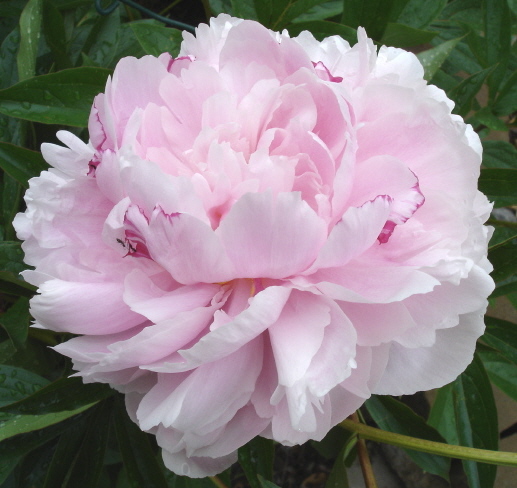
How To Plant The Peony Flower

Peony is a native of flowering plants native to Asia, Southern Europe and Western North America. Most of the species are herbaceous perennials that grow 0.5-1.5 meters tall. Some of the species are woody shrubs 1.5-3 meters tall. Leaves are compound and deeply lobed. Large flowers, often fragrant, ranging from red to white or yellow grows in late spring and early summer. The plant is named after ‘Paeon’, Greek God of medicine and healing. In China, Peony has been cultivated since last more than 2000 years.
Peonies, recognizable for their large blooms, are familiar garden plants. The flowers grow in a variety of colors, with large, showy blossoms that are popular in weddings and home decoration. Peony flowers are not limited to the outdoor garden. While peonies are notoriously difficult to grow indoors, it is possible to do so and enjoy their beautiful blossoms almost year-round.
Peony has a long history of being used as an ornamental plant. The plant is one of the smallest living creatures that are used as National Emblem in China. Besides being the traditional floral symbol of China, Peony is also famous as ‘Flower of Riches and Honor’ and in the Chinese floral art and tattoos. In Japan, Peony is cultivated as an ornamental plant and also for its roots that are used in the treatments for convulsions. In North America, Peony plants are used for ornamental plants and its flowers are used for making cut flowers.
Sow Peony Poppy flower seeds indoors in late winter. Use peat pots and starter mix. Sow the flower seeds on the surface and press the flower seeds into the soil. Peony Poppy flower seeds need light to germinate. Keep flower seeds moist until germination. Another option, and often preferred by many gardeners, is to direct sow the Peony Poppy flower seed outdoors. Peony Poppy flower seed can be sown in the late fall, late winter, or early spring. Prepare the soil by loosening the top several inches, spread the flower seeds and lightly rake. Firm the soil by walking lightly over the area. Thin seedlings to 15 - 18 inches apart. These annual Peony Poppy plants are known to be prolific self-sowers.

Thursday, June 21, 2012

Great ideas On Growing Lilies In The Garden

Lilies are perennial bulbous plants, wintering in uncovered soil. Genus lily is related to the liliaceous family. Bulbs of different sorts have different form: rounded, ovoid, concentric, stolon and rhizomatous. They consist of separate unlocked chaffs, more or less tight to each other. Bulbs do not have a protective cover.
Growing lilies in gardens as a decoration is practiced for a couple of centuries. Nowadays, there are well-known 100 types and 3000 sorts. The sorts of lily, according to their origin, are grouped into 8 main categories.
The first category – Asian hybrids.
The second category – Crispate hybrids, or Martagon-hynrids.
The third category – Snow-white hybrids, or Candidum-hybrids.
The fourth category – American hybrids.
The fifth category - Long-flowered hybrids.
The sixth category – Tubular hybrids.
The seventh category – Oriental hybrids.
To the eighth category belong all the hybrids, which were not included into the previous categories.
Propagation of lilies

Lilies tend to propagate with the help of seeds, bulbs, multipliers, bud-bulblets, bulbs chaffs, scapes cuttings and some – with the help of leaf rootage.
Propagation of lilies with the help of seeds is the easiest way, enabling huge amounts of healthy planting material, adjusted for the local climatic conditions. The drawback if that from seeds grow flowers non typical for the maternal sort. Only by some sorts of lilies generation from seeds is able to save the features of the maternal plants.
Thus, this way of propagation of lilies is unpopular with floriculturists-amatours. But creative people may find this method as a useful one for breeding new hybrids. Those, who would like to use seed method of lilies propagation, has to take into account, that seeds of different sorts are characterized by two sprouting types – overground and underground. An underground type presupposes that seed lobe comes out on the surface that is the bulblet formation takes place from the seeds under the ground.
The seeds with an overground type of growth need to be sown in February-March (if the seeds are planted into uncovered soil, then as soon as soil allows). Types of underground formation are sown in autumn after the harvest. In winter seedings should be kept in the temperature of 1-2 degrees above zero that is very hard to follow in our country.
Vegetative method of propagation is the only way of lilies propagation, during which all the sort peculiarities are fully preserved. The less widespread way is – propagation with the help of bulbs. In a maternal bulb emerge and develop several reproduction buds, which give birth to filial bulbs.